


Realistic Timelines by Severity
When water damage strikes your home — whether from a burst pipe, appliance leak, heavy rain, or flooding — one of the first questions most homeowners ask is: How long will it take to dry out? The answer isn’t a simple fixed number because drying time depends on multiple factors including the severity of the damage, materials affected, type of water, and how quickly mitigation begins. Below is a clear, realistic timeline to help you understand what to expect for different levels of water damage.
Before we go into timelines, it’s important to understand why drying water damage isn’t instant:
Even if a room feels dry to the touch, moisture can linger deep within materials — and professionals often use moisture meters to confirm true dryness before calling the job complete.
What it involves:
Small, isolated leaks (like a minor pipe drip or under‑sink leak)
Immediate response with extraction and equipment setup
Drying timeline:
With proper intervention, minor water damage can often dry within 1–2 days.
Notes:
Floors, baseboards, and small drywall sections usually dry quickly.
Acting within the first 24 hours drastically reduces mold risk.
What it involves:
Larger leaks or moderate saturation of carpet, flooring, drywall, and baseboards
Water has absorbed into materials rather than just on the surface
Drying timeline:
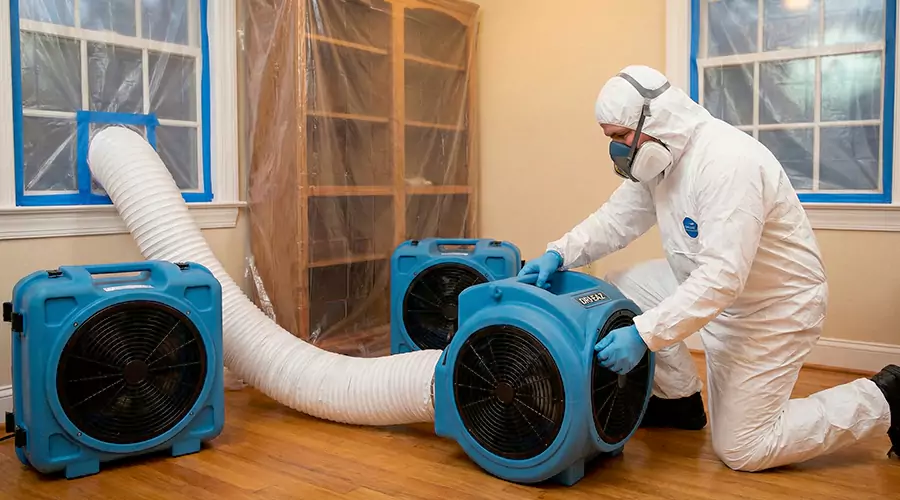
In these cases, complete drying typically takes 3–5 days with professional‑grade drying equipment.
Factors that influence this range:
Moderate damage often requires moisture monitoring and might involve removing baseboards or drilling small holes for targeted drying.
What it involves:
Flooding, stormwater intrusion, sewage backups, or major leaks left untreated for some time
Multiple rooms or materials deeply saturated (insulation, framing, subfloor)
Drying timeline:
This level of damage may need 5–10 days or more just for drying, especially if water has penetrated deeply.
Considerations:
Different materials hold moisture differently:
Hardwood Floors
Hardwood can take longer to dry (7–10 days) because water seeps between boards and into subfloors.
Drywall
Drywall moisture usually resolves within 3–5 days with proper equipment; saturated drywall may need replacement if drying fails.
Carpet & Padding
Carpets and padding can dry in 2–4 days, but padding may need replacement if it remains saturated.
Concrete
Concrete dries the slowest — sometimes taking weeks — because moisture can penetrate deeply into the slab.
You might see water evaporate on its own over time, but surface drying isn’t enough:
Using household fans or dehumidifiers alone often extends drying time and may allow mold and rot to develop.
Drying shouldn’t be declared finished simply because surfaces feel dry. Restoration professionals typically confirm completion by:
Only when moisture content is comparable to unaffected areas is drying considered complete.
Drying is one part of the restoration process. If structural repairs are needed, the total timeline extends beyond drying:
Severe cases involving black water, mold remediation, or structural fixes can take several weeks to months overall, which is why contacting 24 7 Restoration can help ensure timely and professional handling.
There’s no one‑size‑fits‑all answer to how long water damage takes to dry because it varies with the severity of the incident, the materials affected, and the drying methods used. However, most water damage cases fall into these general timelines:
Understanding these realistic expectations helps you plan repairs, manage insurance claims, and ensure your home is properly dried to prevent mold and long‑term issues.
8 Jan, 2025
Our certified experts are ready 24/7 to assist you with emergency restoration services.
GET A QUOTE
